Barefoot Sandals: How to Choose a Pair for Running, Hiking and Everyday
Barefoot sandals are the thinnest, flattest footwear you can buy. How to pick a strap system, get the fit right, and build up to running and hiking in them.
A sandal is the cleanest test of the barefoot idea. There is no midsole to hide behind and no upper to stiffen the foot, so what is left is a few millimetres of rubber and a strap system. That is also what makes a bad one so unpleasant: the sole can be perfect and the straps will still ruin a run.
This guide covers what actually separates a barefoot sandal from a sports sandal, the three closure designs and who each suits, how to size one properly, and the build-up that keeps the first month from becoming an injury. It applies whether you want a pair for trails, for road miles, or for the four months a year when shoes feel like a mistake.
The short version
- For trails: a lugged sole with sticky rubber and a strap system that locks the heel, which is what the hiking shoe guide covers for closed shoes.
- For road miles: thin, flat and simple. A lace-up huarache or a sport strap both work; pick the one you can adjust without stopping.
- For everything else: the same criteria apply, and a slide is fine so long as the sole is flat and the footbed is foot-shaped.
What makes a sandal a barefoot sandal
Most sandals sold for hiking and water sports are not barefoot sandals. They have a moulded arch, a contoured heel cup and a heel that sits above the forefoot, all of which do work that your foot is supposed to do. A barefoot sandal passes four tests:
- No heel lift. The heel and the forefoot sit at the same height. Put a straight edge along the sole to check, because a 10mm rise feels like nothing in the hand and changes how you walk.
- A thin, flexible sole. Thin enough to fold in half and to tell you what you are standing on. Most barefoot sandals land between 5mm and 12mm; anything over 15mm is a shoe you can see through.
- A foot-shaped footbed. Widest at the toes, not at the ball. If the footbed narrows toward the front, your toes will sit on the edge or over it.
- Straps that hold without pressing. The job of the strap system is to keep the foot from sliding, not to support the arch. A strap that crosses the arch under tension is doing the work the muscles should be doing.
The three strap designs, and who each suits
The sole on a barefoot sandal is a solved problem. The strap system is where the models differ, and it decides almost everything about how a pair feels.
Lace-up huarache
A single lace runs through the sole and back around the foot, wrapping the instep and the heel. This is the design that comes from the running sandal tradition, and it holds the foot most securely because the tension is distributed across several points. It also takes the longest to put on and needs the lace retied as it settles. Best for running and uneven ground, worst for a quick slip-on at a campsite.
Sport strap
Webbing straps, a buckle and usually a heel strap or a toe post, closer to what people picture when they hear the word sandal. Faster to put on, easier to adjust while walking, and the heel strap is what stops the foot sliding forward on a descent. Check that the heel strap is adjustable and not a fixed loop, because that is the difference between a sandal that runs and one that only walks.
Slide
One band over the instep and nothing else. The easiest to live with and the least secure, which makes it an everyday and recovery sandal rather than a running one. A slide is worth having if the sole is flat and the footbed is wide; it is not worth running in.
Sandals versus shoes
A closed barefoot shoe and a barefoot sandal ask the same thing of your foot and differ in what they protect you from.
A sandal wins in heat, in water and anywhere you want your toes to spread while you walk. It dries in minutes instead of hours, it does not trap sweat, and the lack of an upper means nothing presses on the top of the foot. For a large part of the world that is most of the year.
A shoe wins on protection and on cold. There is no toe bumper on a sandal, so a kicked root goes straight into the toe box. There is no rock plate, so a sharp stone bruises rather than being spread across the sole. If you are carrying a pack on scree, or working on a site that requires closed toes, the shoe is the right answer and the hiking guide covers that ground.
Running in sandals
Running changes when the sole disappears. Without a cushioned heel to land on, most people shorten their stride and land closer to midfoot within a few runs. Cadence usually rises. That is the mechanism barefoot running is famous for, and it happens on its own rather than through cueing.
What also happens is load. The calf and the Achilles take more work per step, and the small muscles under the arch work through a longer range than they are used to. Soreness in the first two weeks is normal. A sharp pain in the arch or the heel is not, and it means you went too far too early rather than that sandals are wrong for you.
Practical rules for the first month: run shorter than you think you should, run on smoother ground, and keep a pair of shoes in the car until you are sure. A mile or two is a reasonable first run for someone already running regularly. If you are new to running entirely, do not start in sandals: the shoe is not the variable you want to change while everything else is new.
Two sandal-specific problems are worth knowing about. The first is strap rub, which shows up on the top of the foot or between the toes after about three miles and is fixed by toe socks or a different lacing pattern, not by toughening up. The second is debris, which gets under the foot and stays there. A sandal with a slightly raised edge sheds gravel better than a perfectly flat one.
Hiking and trails
Trail sandals earn their place on warm, dry ground. Lugged soles with a sticky rubber compound give more grip on rock than most hiking shoes, because the sole conforms to the surface instead of sitting on it. Stream crossings stop being an event: you walk through and keep going.
The trade is protection. Stone bruising under the ball of the foot is the usual complaint on scree, and it is a function of sole thickness and pack weight rather than fitness. The fix is a thicker sole for loaded days, which is why hiking sandals tend to sit at the thicker end of the barefoot range.
Descents are where a sandal either works or does not. A heel strap that holds the foot back is what stops your toes sliding forward into the front edge for an hour, and it is the single detail to check before buying for trails. On wet rock, barefoot soles are honest: the ones with a soft compound grip, the hard shiny ones skate.
Getting the fit right
Sandals are less forgiving than shoes on width and more forgiving on length, which is the opposite of what people expect.
- Width first. Stand on the footbed with weight on that foot. No part of your foot should hang over the edge, including the outside of the little toe. Overhang is where blisters come from, and no strap adjustment fixes it.
- Length second. Your heel should sit within a couple of millimetres of the rear edge and your toes should stay on the footbed. A sandal slightly too long is workable; one slightly too short puts your heel on the ground.
- Then the straps, in this order. Heel, then instep, then toes. Tighten the heel until the foot cannot slide forward, set the instep so the foot cannot lift, and leave the forefoot loose enough that your toes can spread.
- Walk for ten minutes before deciding. A pressure point you can feel after ten minutes becomes a blister after an hour. If the arch strap is the thing you notice, the sandal is doing too much and you should try a different model.
The first eight weeks
The build-up is the same one that applies to barefoot shoes, with one difference: a sandal offers less protection from the ground, so the foot adapts to texture as well as to load. Give it the eight weeks.
- Weeks 1-2: wear them around the house and on short walks, an hour or two a day, on smooth ground.
- Weeks 3-4: walks of one to two miles, and the first easy trail or park loop. Expect the calf to complain before the foot does.
- Weeks 5-8: longer walks and short runs if you run. Alternate with shoes rather than going all in, because the adaptation is in the tissue, not in the habit.
- Week 8 onward: add distance before you add pace, and take the shoes on any day you are carrying weight.
When a sandal is the wrong choice
Cold is the obvious one. Below about 50°F, a sandal without socks stops being fun and starts being a decision about how long you can tolerate numb toes, and there is no version of that which is good for your feet.
The less obvious one is terrain that punishes a miss. Loose scree under a loaded pack, wet slabby rock, and long descents on sharp stone are all places where a closed shoe with a rock plate is the better tool. Wearing a sandal there is not a philosophy, it is a choice to be uncomfortable.
The brands you will see
Four names come up repeatedly, and they are not interchangeable: the designs differ in closure, which is the part that matters.
Luna builds lace-up huarache sandals with a running background, and the lacing is the reason people stay with them on long distances.
Bedrock makes strap sandals with lugged, sticky soles, which is why they turn up on thru-hikes more than on roads. The Cairn line closes with a Y-strap over the instep and a G-hook heel strap rather than lacing, and that heel strap is what holds the foot back on a descent.
Xero is the accessible end of the market: sport straps, thin soles and a price that makes trying the idea cheap.
Shamma sits at the thin end, with soles built to feel the ground rather than to protect you from it.
Our trail pick is in the catalogue below. For the shoe equivalents of each, the barefoot shoe guide and the minimalist shoe guide both cover the closed-toe versions of the same design decisions.
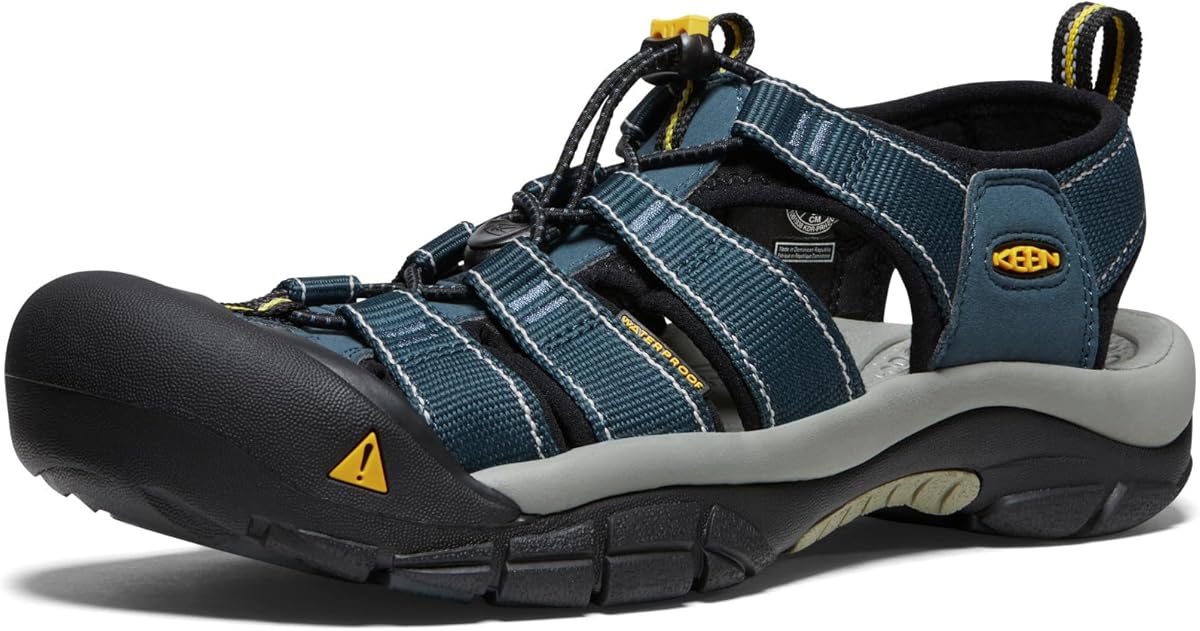
Bedrock Sandals Cairn 3D Pro II
The Cairn 3D Pro II is the ultimate hiking sandal, Vibram Megagrip sole, 3D-contoured footbed, and a secure strap system. Beloved by thru-hikers and ultrarunners for warm-weather adventures.
✓ Pros
- • Incredible traction (Vibram Megagrip)
- • 3D molded footbed
- • Perfect for hot weather hiking
- • Durable construction
✗ Cons
- • Sandal, no toe/foot protection
- • Takes practice on technical terrain
- • Not for cold weather
FAQ
What makes a sandal a barefoot sandal?
Four things, and they are all measurable. The heel sits at the same height as the forefoot, the sole is thin enough to feel the ground and to roll up, the footbed is shaped like a foot rather than like a shoe, and the straps hold the foot down without pressing into the arch. A sports sandal with a moulded arch and a 20mm heel fails at least three of those. Read how barefoot shoes differ from traditional ones.
Which barefoot sandals should I buy for running?
The four brands that come up in every running-sandal thread are Luna, Bedrock, Xero and Shamma, and the difference between them is the closure rather than the sole. Luna's lace-up huarache wraps the foot most securely on uneven ground, Bedrock's Y-strap with a G-hook heel holds the foot back on steep descents, Xero's sport straps are the easiest to get on and off and the cheapest way in, and Shamma builds the thinnest soles of the group. Start with the one whose closure you can adjust mid-run. See the zero drop running picks.
Can you run a marathon in sandals?
People do, and they have for decades, but the sandal is not what makes it possible. A marathon in sandals asks for a year of running in them first, because the load moves to the calf and the foot and those adapt slower than your enthusiasm does. The failure mode is not the race, it is the six weeks of training before it. See the running shoe picks.
Are barefoot sandals good for hiking?
On warm, dry trails they are excellent, and thru-hikers use them for long sections. What you give up is protection: no rock plate means sharp stones bruise, and no toe bumper means the one root you kick hurts. Lugged soles with a sticky rubber compound matter more on a sandal than on a shoe, because there is no midsole to absorb a slide. See the barefoot hiking picks.
Do you wear socks with barefoot sandals?
For running and long days, toe socks are worth the fuss: they stop the strap rubbing between your toes and they stop the footbed getting slick. For everyday wear most people go barefoot, which is the point. Either way, wash the footbed, because a sandal that never dries develops a smell that no amount of rinsing fixes. See the minimalist shoe guide.
How do I know a barefoot sandal fits?
Stand on it. Your heel should sit within a couple of millimetres of the rear edge, your toes should stay inside the footbed with the straps done up, and no part of your foot should hang over the side, because overhang is what rubs. Then walk: the straps should hold the foot steady without any single point pressing hard enough to notice after ten minutes. See the full barefoot shoe guide.
Related guides
- Best Barefoot Hiking Shoes, the closed-toe trail picks
- Best Zero Drop Running Shoes, for road and trail miles
- Zero Drop vs Barefoot, what the two terms actually mean
- Barefoot vs Traditional Shoes, the case and the caveats