Best barefoot shoes for women in 2026
The 8 best barefoot shoes for women, tested and compared. Detailed sizing notes, volume considerations, and practical model recommendations.
Conventional women's footwear frequently combines narrow toe boxes, elevated heels, and rigid soles that restrict natural biomechanics. Minimalist footwear counters these constraints by providing zero drop from heel to toe, an anatomical toe box, and a flexible sole that allows the foot to articulate naturally.
Selecting the right model requires matching specific foot volume, heel width, and intended use. We evaluated these eight models across walking, gym workouts, and daily wear to determine which shoes provide genuine anatomical function alongside durable construction.
This guide outlines sizing considerations, volume differences, and recommendations across different price tiers.
Quick comparison
| Shoe | Price | Rating | Best For | |
|---|---|---|---|---|
| Vivobarefoot Primus Lite IV | $160 | 4.7/5 | Everyday wear | Check Price → |
| Lems Primal 2 | $105 | 4.4/5 | Wide feet | Check Price → |
| Xero Shoes HFS II | $110 | 4.5/5 | Best value | Check Price → |
| Vivobarefoot Ra III | $180 | 4.4/5 | Minimalist sneaker | Check Price → |
| Vivobarefoot Geo Court III | $165 | 4.4/5 | Classic sneaker look | Check Price → |
| Feelgrounds Original | $129 | 4.2/5 | Casual sneaker | Check Price → |
| Groundies Amsterdam | $150 | 4.3/5 | European casual | Check Price → |
| WHITIN Minimalist Trail Runner | $45 | 4/5 | Budget pick | Check Price → |
Why women choose barefoot shoes
The transition toward barefoot footwear is driven by the practical impact of footwear design on foot mechanics and posture.
Anatomy does not match tapered toe boxes
Conventional women's shoes average narrower profiles than men's models, especially in the forefoot. Pointed dress shoes and tapered trainers force the big and small toes inward. Over extended periods, this compression contributes to bunion formation, digital deformities, and decreased intrinsic foot strength. An anatomical toe box provides space for the metatarsals to spread, stabilizing the foot during walking and lifting.
The impact of heel elevation
Many casual shoes incorporate a slight heel rise. Sustained heel elevation shortens the calf complex and Achilles tendon, tilts the pelvis anteriorly, and increases forefoot pressure. Zero-drop footwear places the calcaneus and metatarsal heads on an even plane, restoring a neutral stance.
Understated aesthetics
Early barefoot shoes featured awkward, bulbous profiles. Current models from brands like Vivobarefoot, Groundies, and Feelgrounds use clean lines, low-profile soles, and leather or knit uppers that pair easily with casual or business-casual attire.
For more on the broader differences between barefoot and traditional footwear, see our barefoot vs traditional shoes comparison.
What to look for in women's barefoot shoes
While core barefoot criteria remain constant regardless of gender (zero drop, anatomical toe box, thin sole), specific morphological differences affect fit.
Fit differences matter
- Narrower heels: Many women have a narrower heel relative to forefoot width. Unisex barefoot shoes that fit the toe box may slip at the heel. Brands like Vivobarefoot and Xero Shoes design their women's sizing with a slightly tighter heel pocket.
- Lower volume: Women's feet often have less vertical volume than men's. Some unisex shoes can feel loose across the top of the foot. Look for shoes with adjustable lacing or lower-profile uppers.
- Shorter toe length: Women's feet tend to be proportionally shorter for the same width. A shoe that fits a man's foot well may leave excess room in the toe box for a woman. Sizing down or choosing women's-specific models helps.
Style considerations
- Color options: Barefoot brands are expanding colorways, but not all offer diverse palettes. Vivobarefoot and Groundies tend to have the widest range.
- Versatility: A shoe that works for the gym, brunch, and the office earns its keep. Our picks below prioritize versatility unless noted otherwise.
- Silhouette: Chunky, bulbous barefoot shoes exist, but most of our picks have sleek profiles that pass as normal sneakers.
Transition friendliness
If you're new to barefoot shoes, consider starting with a shoe that has a slightly thicker sole (6–10mm) rather than an ultra-thin option. This makes the transition gentler on your feet and calves. The best barefoot shoes guide has more on transitioning safely.
Best barefoot shoes for women

Vivobarefoot Primus Lite IV
The gold standard for everyday barefoot shoes. The Primus Lite IV delivers exceptional ground feel with a 6mm sole, wide toe box, and featherlight construction. Perfect for walking, light gym work, and daily wear.
✓ Pros
- • Ultra-thin sole for maximum ground feel
- • Extremely lightweight
- • Recycled materials
- • Versatile everyday shoe
✗ Cons
- • Premium price point
- • Durability concerns on rough surfaces
- • Takes adjustment if new to barefoot
The Primus Lite IV delivers a 6mm sole with direct ground feedback, an anatomical toe box, and a lightweight knit upper. It functions well across daily wear, walking, and gym sessions, with colorways suitable for casual wardrobes.
Lems Primal 2
Lems Primal 2 offers one of the widest toe boxes available with a natural foot shape and clean aesthetic. Slightly more cushioned than pure minimalist shoes, making it a great transitional option.
✓ Pros
- • Widest toe box in its class
- • Clean casual styling
- • Comfortable straight out of box
- • Good for wider feet
✗ Cons
- • Less ground feel than thinner options
- • Limited color options
- • Not ideal for running
For wide feet, the Primal 2 features one of the widest toe boxes available. The 9mm stack height offers a forgiving transition on hard surfaces, while the clean styling pairs easily with casual pants and skirts.

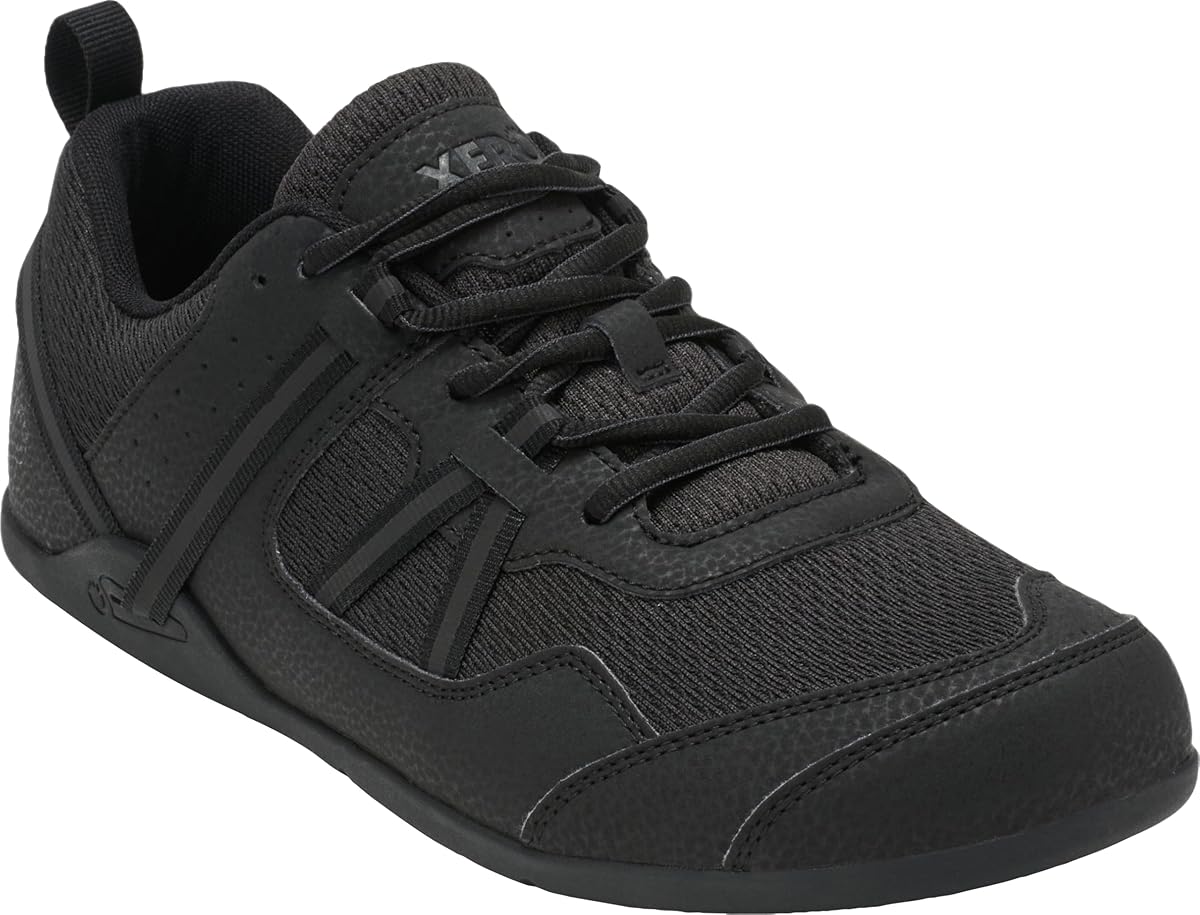
Xero Shoes HFS II
Xero's most popular shoe combines a thin, flexible sole with impressive durability. The HFS II works equally well for short runs and everyday wear, making it the best value in barefoot shoes.
✓ Pros
- • Excellent value for money
- • Good ground feel
- • Works for running and daily wear
- • 5,000-mile sole warranty
✗ Cons
- • Not as flexible as Vivobarefoot
- • Styling is polarizing
- • Can run narrow for very wide feet
The HFS II is the value champion of barefoot shoes, and it's an excellent choice for women who want one shoe for everything. At around $100 (often less on sale), it undercuts premium brands while delivering a genuine barefoot experience: 5.5mm stack, zero drop, wide toe box, and impressive flexibility. It works for walking, running, gym workouts, and daily errands. The fit is slightly more structured than the Primus Lite, which some women prefer for active use. Xero also offers a 5,000-mile sole warranty, which is unheard of at this price point. The only caveat: if you have very wide feet, the HFS II can feel snug compared to Lems or Feelgrounds.
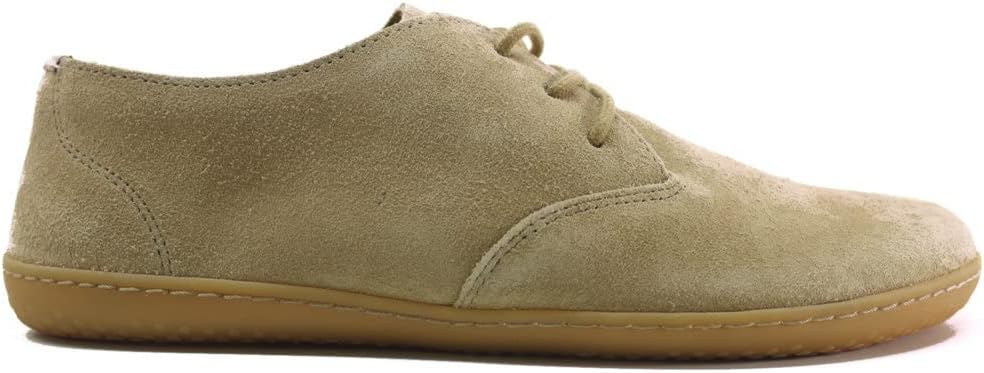
Vivobarefoot Ra III
The Ra III is Vivobarefoot's premium leather sneaker, minimal sole, wide toe box, and clean styling that works anywhere from casual Fridays to weekend walks. A true everyday minimalist shoe.
✓ Pros
- • Premium leather sneaker look
- • Thin sole for ground feel
- • Versatile styling
- • Comfortable from day one
✗ Cons
- • Pricey
- • White versions stain easily
- • Leather needs care
The Ra III provides barefoot ergonomics in an understated leather sneaker. The 6mm sole offers reliable ground feel while the wide toe box remains unobtrusive, making it suitable for casual office settings.
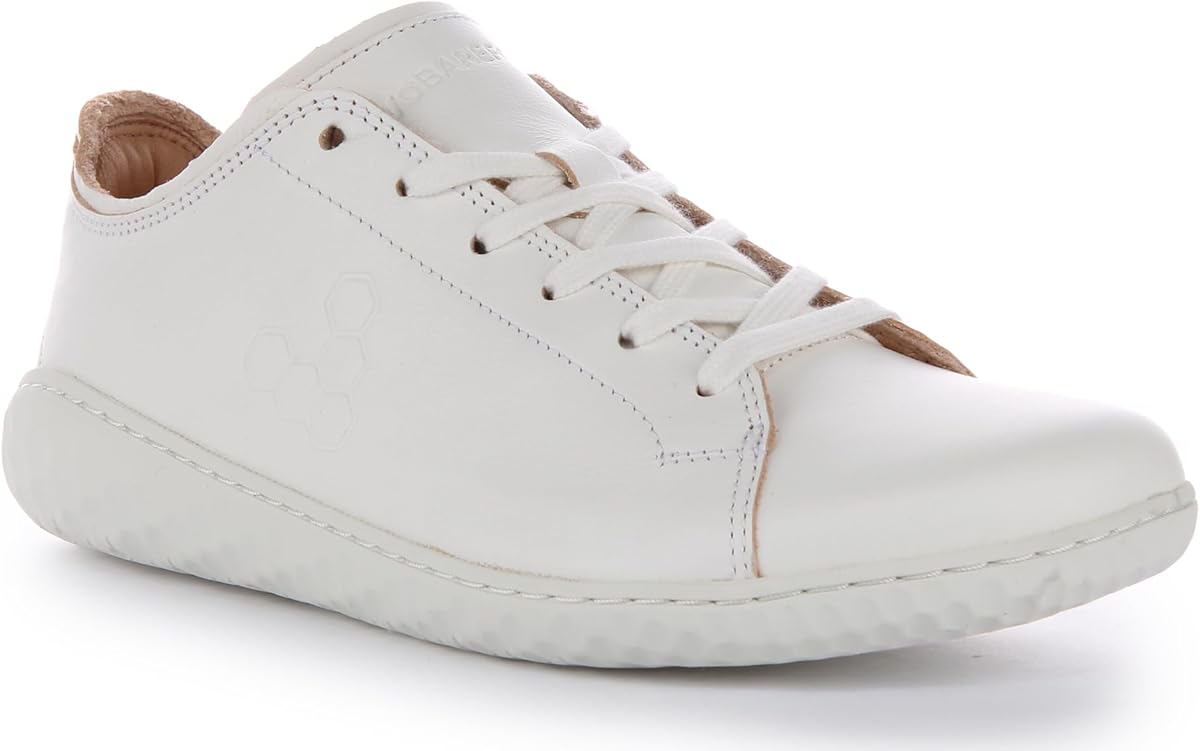
Vivobarefoot Geo Court III
The Geo Court III is Vivobarefoot's answer to the classic white leather sneaker. Think Stan Smith vibes with a wide toe box and 6mm sole. The most stylish barefoot sneaker on the market, nobody will know.
✓ Pros
- • Looks like a classic court sneaker
- • Premium leather
- • Excellent ground feel
- • Works with jeans, chinos, or shorts
✗ Cons
- • Expensive for a sneaker
- • White leather shows dirt
- • Leather sole less grippy when wet
The Geo Court III adapts the court sneaker silhouette to barefoot parameters, combining a 6mm sole with a leather upper and an anatomical toe box for everyday urban wear.
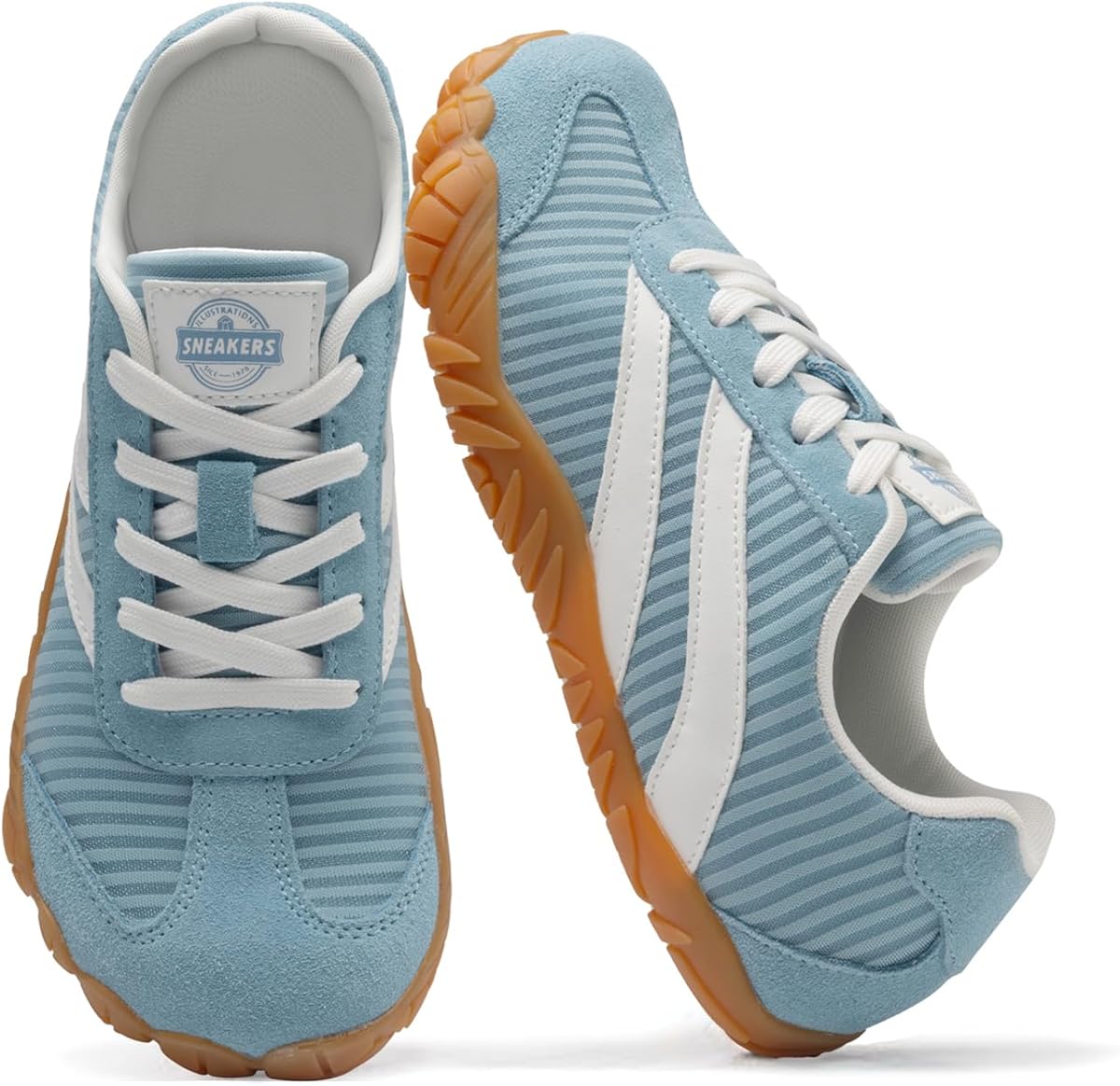
Feelgrounds Original
Feelgrounds' Original is a modern knit barefoot sneaker that doesn't look like a barefoot shoe. Machine washable, comfortable, and stylish, it's converting people who never thought they'd try barefoot.
✓ Pros
- • Knit upper is incredibly comfortable
- • Modern sneaker aesthetic
- • Machine washable
- • Good price point
✗ Cons
- • Knit isn't waterproof
- • Less durable than leather
- • Limited support for long walks on rough terrain
The Feelgrounds Original is a breathable knit sneaker with a flexible 6mm sole. The upper accommodates wider feet without creating pressure points across the top of the foot.
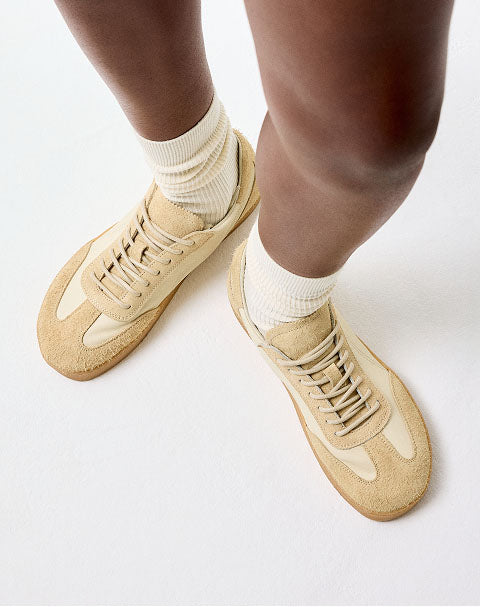
Groundies Amsterdam
Groundies' Amsterdam is a minimalist sneaker that could pass for a designer shoe. Clean European lines, multiple colorways, and a 5mm sole that keeps you connected to the ground. Fashion-first barefoot.
✓ Pros
- • Sleek European sneaker design
- • Canvas and leather options
- • Ultra-thin sole
- • Multiple colorways
✗ Cons
- • European sizing
- • Limited US availability
- • Canvas isn't waterproof
The Groundies Amsterdam pairs a 5mm sole with clean European sneaker styling, providing an anatomical fit without looking overly technical.
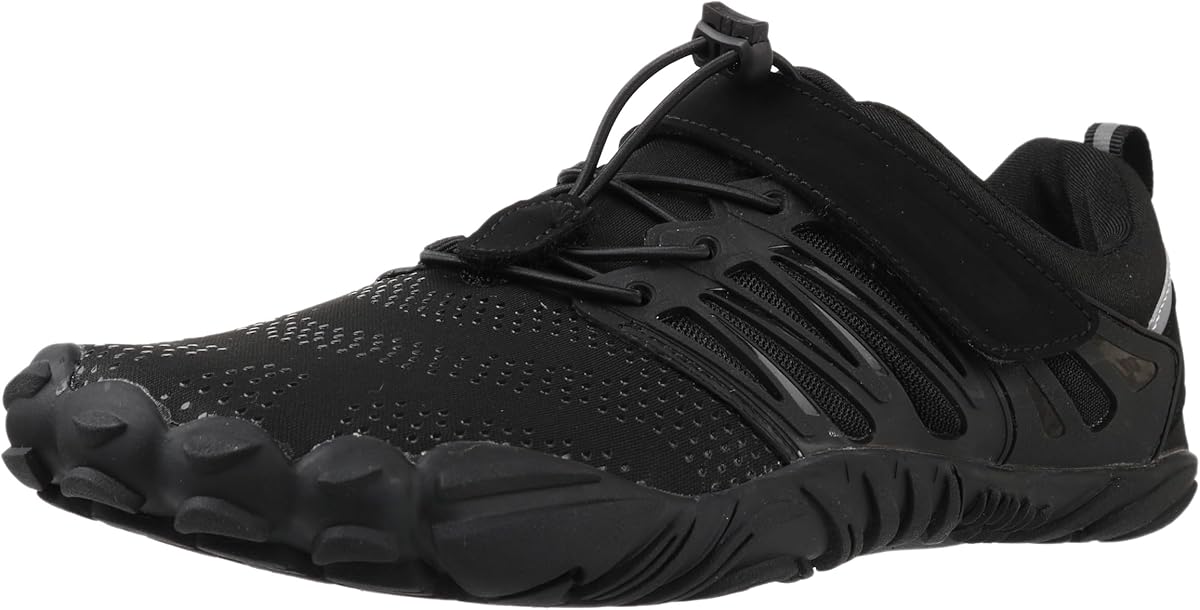
WHITIN Minimalist Trail Runner
At under $50, WHITIN's trail runner is the most affordable way to try barefoot shoes. Wide toe box, zero drop, and reasonable quality make it a risk-free entry point into minimalist footwear.
✓ Pros
- • Incredible value
- • Wide toe box
- • Good for trying barefoot shoes
- • Available on Amazon
✗ Cons
- • Less durable than premium brands
- • Basic materials
- • Sole grip is mediocre
The WHITIN trail shoe is an economical option for initial trials. At under $50, it provides a zero-drop platform, flexible rubber sole, and wide toe box with a 10mm stack height that softens initial transition days.
FAQ
Are barefoot shoes good for women?
Absolutely. Barefoot shoes may be especially beneficial for women because conventional women's footwear tends to be narrower and more heel-elevated than men's. Years of wearing pointed toe boxes and heeled shoes can weaken foot muscles, compress toes, and alter natural gait. Barefoot shoes give feet the space and freedom they need to function naturally. Many women report reduced foot pain, better balance, and stronger feet after switching.
Do barefoot shoes fit women differently?
Yes. Women frequently present with narrower calcaneal width relative to metatarsal width, as well as lower instep volume. Unisex models with broad heel cups can slip. Look for brands that offer women-specific lasts or models with adjustable midfoot lacing to secure the heel.
Can barefoot shoes help with bunions?
Many women find barefoot shoes helpful for bunion management. A wide toe box allows the big toe to rest in its natural position instead of being pushed inward, which can slow bunion progression and reduce discomfort. The absence of arch support also allows the foot to move naturally. For severe bunions, look for shoes with an extra-wide toe box like the Lems Primal 2 or Feelgrounds Original. See our barefoot shoes for flat feet guide for related foot health insights.
Can I wear barefoot shoes for running?
Yes. Many women run in barefoot shoes. The Xero HFS II and Vivobarefoot Primus Lite IV are both popular choices for running. If you're new to barefoot running, start with walking first, then short run-walk intervals. Barefootrunning.net has excellent resources on technique, cadence, and injury prevention for barefoot runners.
What about barefoot shoes for wide feet?
If you need maximum forefoot width, the Lems Primal 2 offers one of the most generous toe boxes on the market. The Feelgrounds Original and WHITIN trail runner also provide ample room. Ensure the shoe maintains a wide footprint through the midfoot rather than tapering inward.
Are toe shoes better than barefoot shoes for women?
Both options work, but they serve different preferences. Toe shoes (with individual toe pockets) offer maximum toe splay and are excellent for foot strengthening. Barefoot shoes are more socially versatile, easier to put on and take off, and generally more accepted in everyday settings. For most women, barefoot shoes are the practical choice, but toe shoes are worth trying if you want maximum toe freedom.