Best barefoot shoes for walking in 2026
The 6 best barefoot shoes for daily walking, tested and compared. From Vivobarefoot to budget WHITIN options, with practical transition guidance.
Walking is the simplest way to adapt to barefoot footwear: it is lower impact than running, allows straightforward gait adjustments, and builds foot strength progressively. Not every model suits walking equally well; some outsoles are too thin for concrete miles, while others lack the upper comfort needed for all-day wear.
We evaluated these models across daily commuting, errands, and long weekend walks to identify 6 picks for different needs and budgets.
Quick comparison
| Shoe | Price | Rating | Best For | |
|---|---|---|---|---|
| Vivobarefoot Primus Lite IV | $160 | 4.7/5 | Everyday wear | Check Price → |
| Lems Primal 2 | $105 | 4.4/5 | Wide feet | Check Price → |
| Xero Shoes HFS II | $110 | 4.5/5 | Best value | Check Price → |
| Vivobarefoot Ra III | $180 | 4.4/5 | Minimalist sneaker | Check Price → |
| Feelgrounds Original | $129 | 4.2/5 | Casual sneaker | Check Price → |
| WHITIN Minimalist Trail Runner | $45 | 4/5 | Budget pick | Check Price → |
Why walk in barefoot shoes?
Conventional walking shoes do much of the mechanical work feet evolved to handle: thick foam blunts impact feedback, rigid arch support immobilizes the midfoot, and tapered toe boxes compress the digits. Over time, these design choices reduce intrinsic foot strength.
Barefoot shoes reverse that constraint:
- Foot muscles activate: Without artificial arch support, intrinsic foot muscles engage continuously. Clinical studies demonstrate increases in foot muscle volume within 12 weeks of minimalist walking.
- Natural gait returns: Zero-drop soles keep the heel and forefoot coplanar, discouraging the exaggerated heel strike induced by elevated shoes.
- Better balance: Thin soles preserve sensory feedback from the ground, improving proprioceptive awareness of body position.
- Toe splay: A wide toe box allows the toes to spread during weight bearing, improving base stability.
- Reduced joint impact: A shorter stride and balanced foot placement reduce eccentric shock loading on knees and hips.
For the full breakdown, see our barefoot vs traditional shoes comparison.
What to look for in a barefoot walking shoe
Not every barefoot shoe makes a great walker. Here's what matters most:
- Zero drop: The heel and toe remain at the exact same height, keeping posture neutral.
- Wide toe box: The front of the shoe follows foot anatomy rather than tapering to a point.
- Flexible sole: The sole should bend and twist freely in your hands.
- Appropriate stack height (6–10mm): For paved walking, a 6 to 10mm sole balances ground perception with protection from road debris.
- Comfortable upper: Walking involves long continuous hours, making breathable fabrics and friction-free linings critical.
- Standard styling: For daily wear to work or social gatherings, an understated silhouette is often practical.
Best barefoot shoes for walking

Vivobarefoot Primus Lite IV
The gold standard for everyday barefoot shoes. The Primus Lite IV delivers exceptional ground feel with a 6mm sole, wide toe box, and featherlight construction. Perfect for walking, light gym work, and daily wear.
✓ Pros
- • Ultra-thin sole for maximum ground feel
- • Extremely lightweight
- • Recycled materials
- • Versatile everyday shoe
✗ Cons
- • Premium price point
- • Durability concerns on rough surfaces
- • Takes adjustment if new to barefoot
The Primus Lite is our top walking pick because it nails the balance: thin enough for genuine ground feel, thick enough for all-day comfort. The knit upper breathes well and the 6mm sole handles sidewalks, parks, and light trails. If you buy one barefoot shoe for walking, this is it.
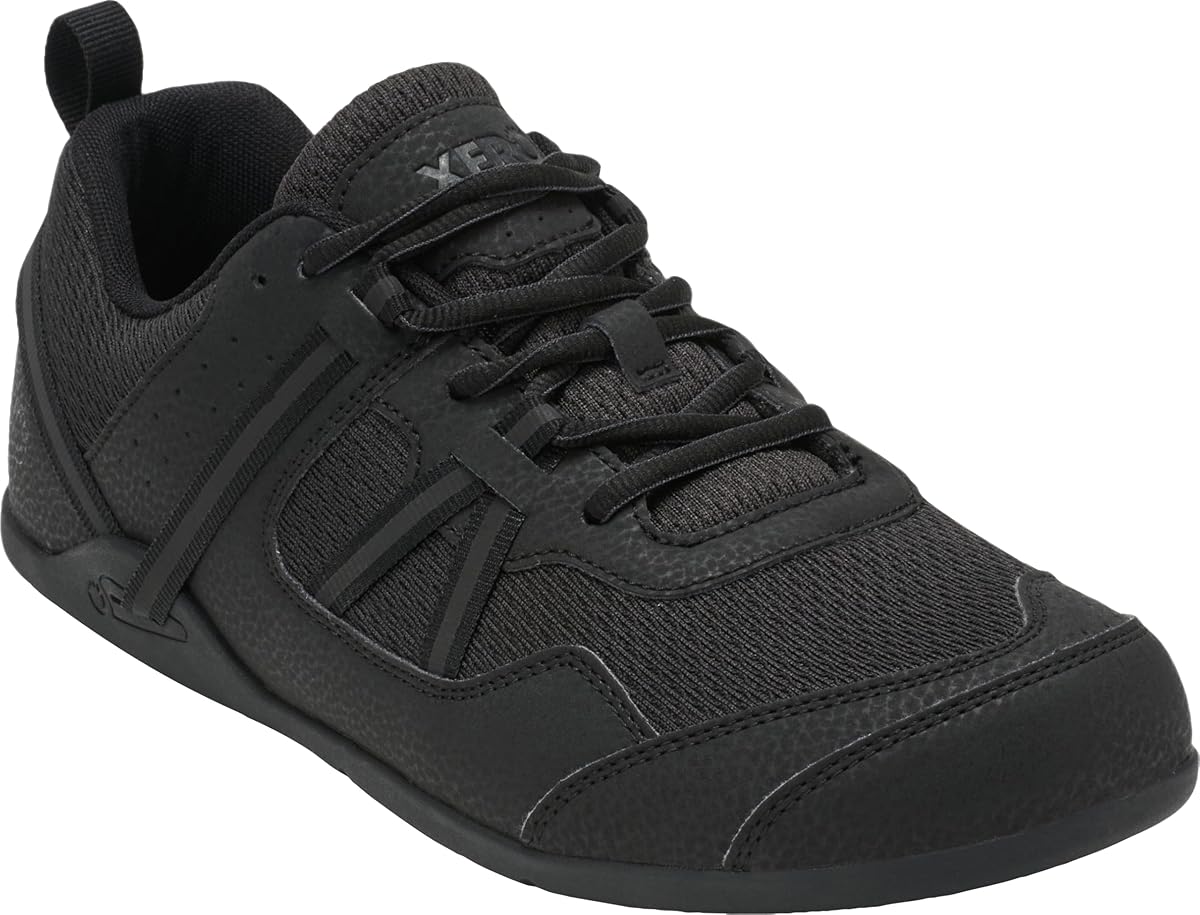
Lems Primal 2
Lems Primal 2 offers one of the widest toe boxes available with a natural foot shape and clean aesthetic. Slightly more cushioned than pure minimalist shoes, making it a great transitional option.
✓ Pros
- • Widest toe box in its class
- • Clean casual styling
- • Comfortable straight out of box
- • Good for wider feet
✗ Cons
- • Less ground feel than thinner options
- • Limited color options
- • Not ideal for running
If wide feet have been your struggle with conventional shoes, the Primal 2 is a revelation. The toe box is one of the widest in the barefoot world. The 9mm sole is forgiving for transitioning walkers, and the casual look works for everyday wear.

Xero Shoes HFS II
Xero's most popular shoe combines a thin, flexible sole with impressive durability. The HFS II works equally well for short runs and everyday wear, making it the best value in barefoot shoes.
✓ Pros
- • Excellent value for money
- • Good ground feel
- • Works for running and daily wear
- • 5,000-mile sole warranty
✗ Cons
- • Not as flexible as Vivobarefoot
- • Styling is polarizing
- • Can run narrow for very wide feet
The HFS II punches above its price. At around $100 (vs $140+ for Vivobarefoot), it's the best value barefoot walking shoe. Slightly more structured than the Primus Lite, which some walkers prefer. Works equally well for light jogging.
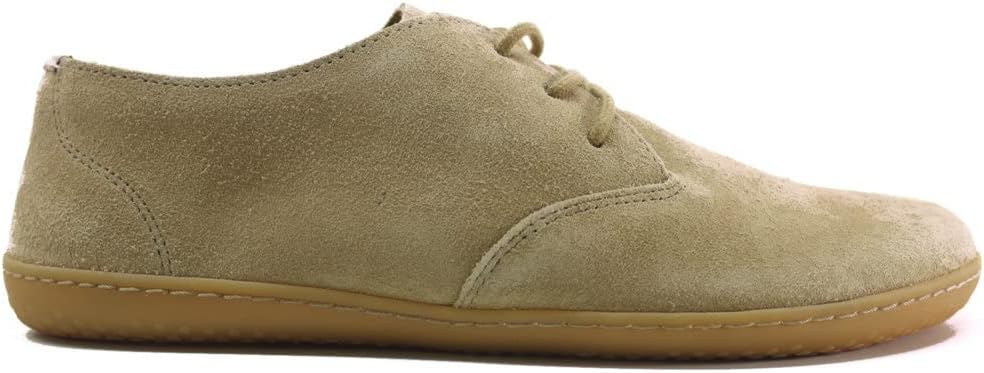
Vivobarefoot Ra III
The Ra III is Vivobarefoot's premium leather sneaker, minimal sole, wide toe box, and clean styling that works anywhere from casual Fridays to weekend walks. A true everyday minimalist shoe.
✓ Pros
- • Premium leather sneaker look
- • Thin sole for ground feel
- • Versatile styling
- • Comfortable from day one
✗ Cons
- • Pricey
- • White versions stain easily
- • Leather needs care
The Ra III looks like a regular minimalist sneaker. Nobody will know it's a barefoot shoe unless you tell them. The leather version works in casual office settings. For daily walkers who need versatility across social contexts, this is the pick.
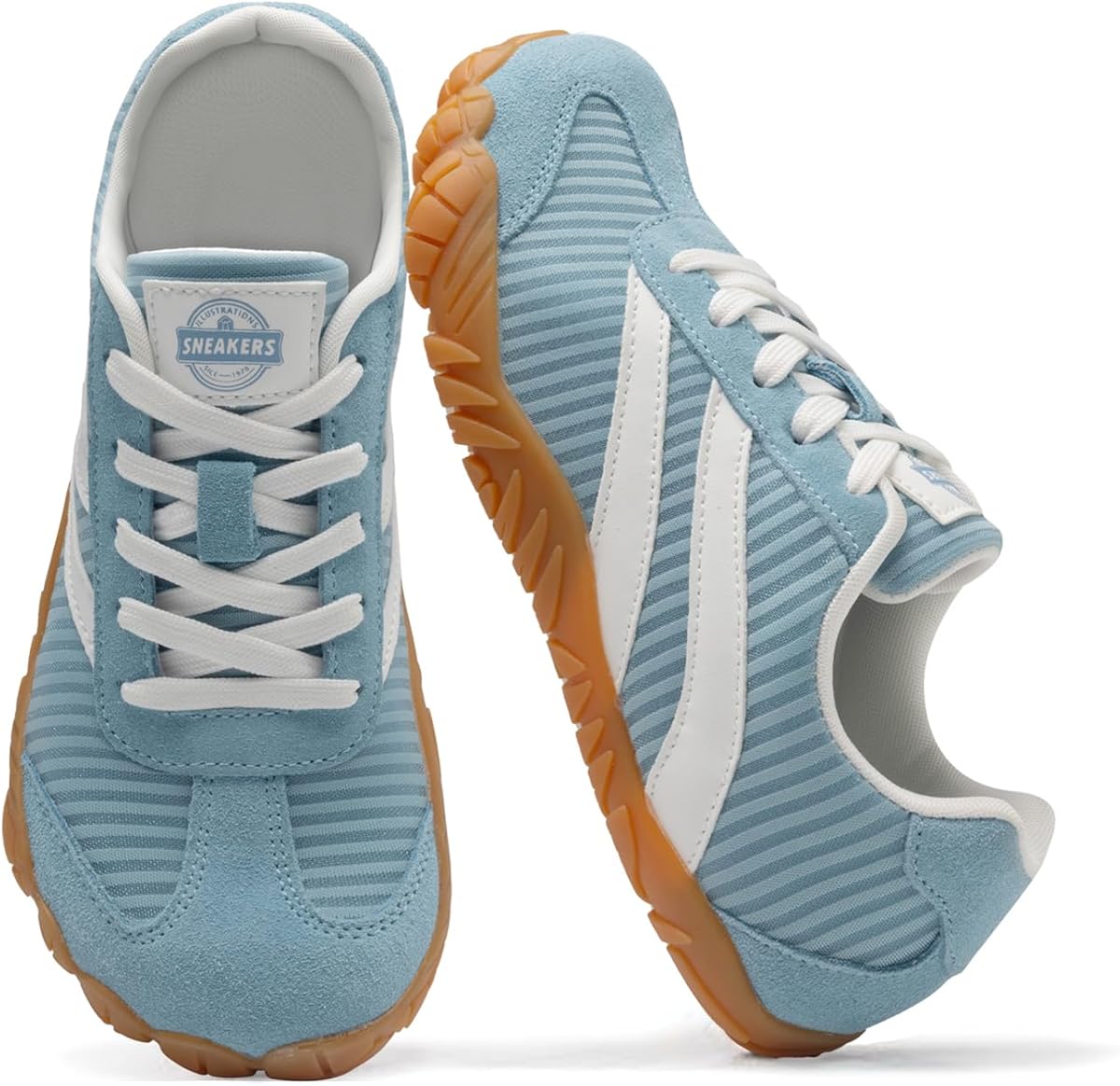
Feelgrounds Original
Feelgrounds' Original is a modern knit barefoot sneaker that doesn't look like a barefoot shoe. Machine washable, comfortable, and stylish, it's converting people who never thought they'd try barefoot.
✓ Pros
- • Knit upper is incredibly comfortable
- • Modern sneaker aesthetic
- • Machine washable
- • Good price point
✗ Cons
- • Knit isn't waterproof
- • Less durable than leather
- • Limited support for long walks on rough terrain
Clean, simple, and comfortable. The Feelgrounds Original provides minimalist benefits in an understated sneaker shape. The textile upper is soft immediately and requires no break-in period.
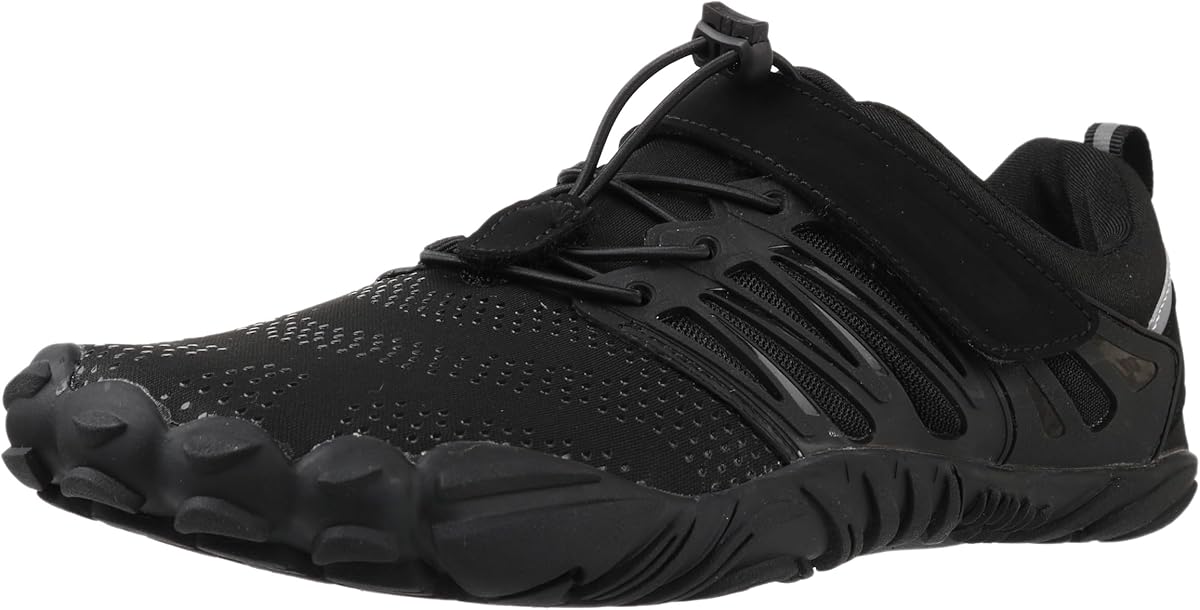
WHITIN Minimalist Trail Runner
At under $50, WHITIN's trail runner is the most affordable way to try barefoot shoes. Wide toe box, zero drop, and reasonable quality make it a risk-free entry point into minimalist footwear.
✓ Pros
- • Incredible value
- • Wide toe box
- • Good for trying barefoot shoes
- • Available on Amazon
✗ Cons
- • Less durable than premium brands
- • Basic materials
- • Sole grip is mediocre
Under $50 and practical. While the WHITIN uses simpler materials than Vivobarefoot, it provides a functional entry point with a wide toe box, zero-drop profile, and flexible rubber sole.
How to transition to barefoot walking
Transitioning to minimalist footwear for walking requires progressive adaptation. Intrinsic foot muscles need time to build conditioning after years of passive support.
Weeks 1–2: Short initial sessions
Start with 20 to 30 minutes of walking in barefoot shoes, wearing conventional footwear for the remainder of the day. Focus on maintaining a relaxed stride with midfoot landings rather than striking hard on the heel. Detailed form cues are available in barefootrunning.net's technique guides.
Weeks 3–4: Extending duration
Extend walking time to 45 or 60 minutes. Mild soreness in the arches and calves reflects normal muscular adaptation.
Weeks 5–6: Mixed surfaces
Wear minimalist shoes for half the day. Vary the terrain across asphalt, packed dirt, and grass to challenge stabilizing muscles through different angles.
Weeks 7–8: Full daily wear
Most individuals can wear minimalist shoes throughout the day by this stage. Adjust volume based on comfort: mild muscular fatigue is normal, but acute joint discomfort indicates that mileage should be scaled back.
Strength support: Pair walking with targeted foot strengthening exercises, including toe spreads, single-leg balancing, and calf raises.
FAQ
Are barefoot shoes good for walking?
Yes. Walking is an ideal starting activity for minimalist footwear. The lower impact loads make it easy to build foot strength and proprioception safely.
Can you walk all day in barefoot shoes?
Once adapted over a period of 4 to 8 weeks, yes. The intrinsic foot muscles gradually develop the endurance required to support your arch without external cushioning.
Do barefoot shoes cause pain during walking?
Proper adaptation prevents pain. Temporary muscular fatigue is standard, but sharp heel or arch discomfort indicates that volume should be reduced or a shoe with slightly more stack height should be used during the transition.
Can you walk on concrete in barefoot shoes?
Yes. Concrete is the most common surface for urban walking. For extended sidewalk mileage, shoes with 6 to 9mm of outsole rubber provide adequate puncture and abrasion defense while preserving foot mechanics.
Are barefoot shoes helpful for flat feet?
Frequently, yes. Many flat feet are functionally weak rather than structurally rigid. Minimalist walking requires the arch muscles to stabilize each step, which often improves muscle tone. See our guide to flat feet for specific recommendations.
What is better for walking: standard barefoot shoes or toe shoes?
Both formats work well. Standard barefoot shoes offer anatomical toe boxes with conventional styling that transitions easily into public settings. Toe shoesprovide individual toe articulation for maximum splay. For most daily walking, standard barefoot shoes remain the more versatile choice.